Hoyo Azul Punta Cana: Ultimate Visitor Guide to the Blue Hole
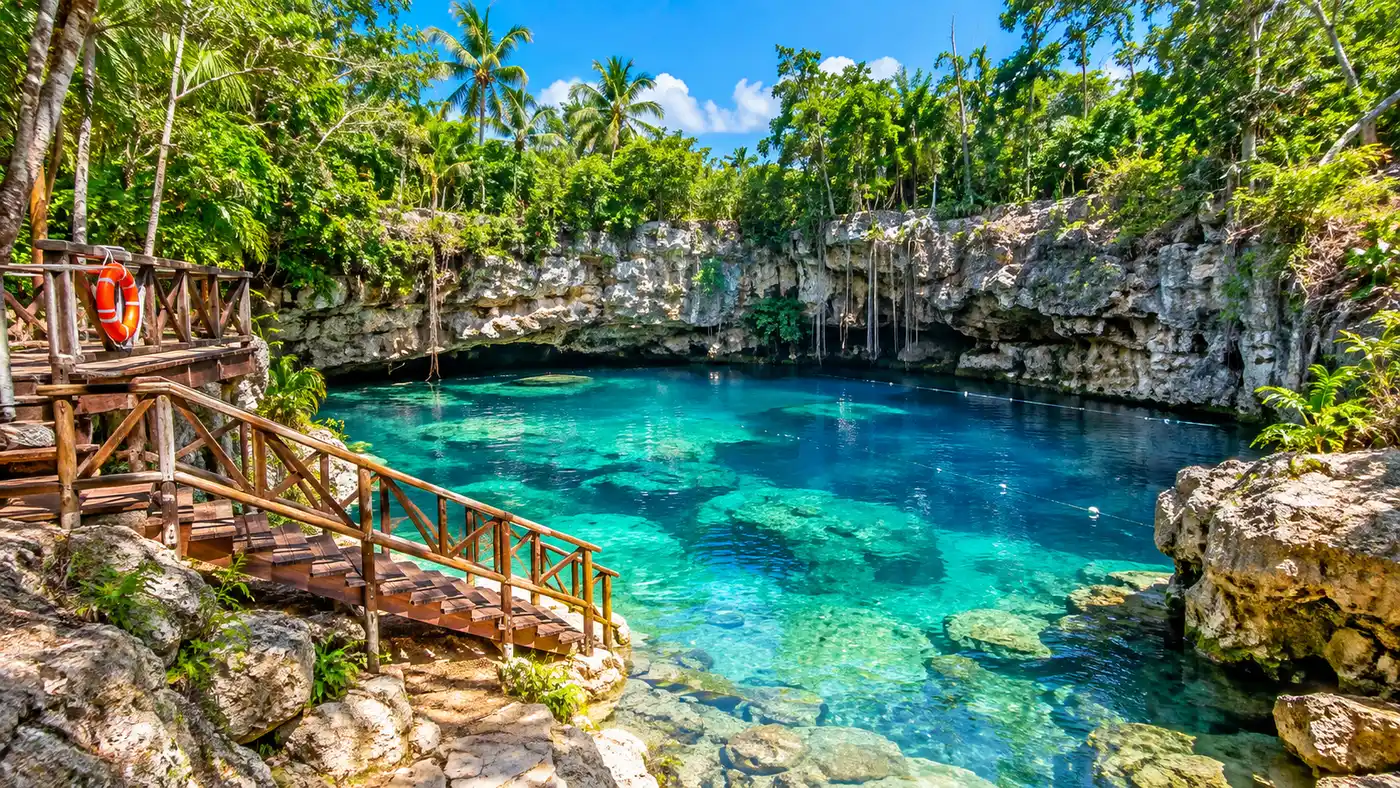
The first thing that hits you is the sheer cliff wall looming directly overhead. It drops straight down into a basin of impossible neon turquoise water, sheltered by lush ferns and dangling jungle vines. Tucked away at the base of a 215-foot limestone cliff inside Cap Cana, hoyo azul punta cana looks like something a movie set designer dreamt up. Photos online look edited, almost radioactive. In person, honestly, the water is even brighter because sunlight bounces off the white limestone floor deep beneath the surface and illuminates the entire cavern pool from below.
Most travelers visit this sinkhole as the centerpiece of their day trip from nearby resort zones. Getting the most out of your visit requires a bit of strategy because you cannot simply drive up, pay five bucks to a gatekeeper, and walk in alone. The pool sits deep inside an eco-adventure park, meaning your trip involves trail hiking, lockers, park logistics, and timing crowds. Here is everything you need to know before you take the plunge into the Dominican Republic's most famous natural swimming hole.
Book your cenote Punta Cana experience:
What Makes the Hoyo Azul Cenote Unique
Geologically speaking, this natural feature is an open cenote, similar to the sinkholes found across the Yucatan peninsula but with a distinct Caribbean cliffside formation. Rainwater slowly dissolved the porous limestone over thousands of years, eventually collapsing subterranean chambers and carving out this natural basin. It measures roughly 46 feet deep at its lowest drop. The bottom slopes downward from the wooden entry deck, dropping quickly into shadowy indigo pockets along the back wall.
The clarity of this blue water cenote punta cana boasts is staggering. Standing on the wooden viewing deck, you can see tree branches resting thirty feet down on the white silt bottom as if they were resting behind display glass. There is almost no organic algae or pond scum. That is because the water continuously filters through the subterranean limestone matrix before welling up into the basin. It is fresh, cool, and incredibly pure, maintaining a steady temperature around 70 degrees Fahrenheit all year.
Note: Standard sunscreen and bug sprays are strictly prohibited in the water because the oils coat the surface and destroy the fragile aquatic biome. Rinse off thoroughly at the outdoor trail showers before heading down the final wooden staircase.
Unlike standard underground sinkholes that trap stale air, the opening here sits open to the canopy. Breezes drift across the water, carrying the scent of damp moss, wet rock, and tropical blossoms from the surrounding forest. When the mid-morning sun angles over the lip of the Farallón ridge, beams of white light pierce straight to the bedrock. It produces a halo effect that explains why locals originally named it cenote ojo azul punta cana.
Getting to Hoyo Azul Cap Cana: Location, Access, and Scape Park
You will find hoyo azul cap cana on the southern tip of the greater Punta Cana region, tucked behind the private gates of the Cap Cana development. It is roughly a 20-minute drive from Punta Cana International Airport and about 40 minutes from the resort strip in Bávaro. You cannot purchase a standalone admission ticket just for the cenote at the gate. The sinkhole is fully integrated into the Scape Park eco-park property, meaning you must buy a general admission day pass to access the trail.
Because entry requires a park pass, your budget needs to reflect a full excursion rather than a quick stop. Standard day tickets run about $129 for adults and $89 for kids, though booking online ahead of time often knocks 10 or 15 percent off the gate price. Transportation is included from most major hotels, which saves you the headache of negotiating local taxis. Taxis in this corner of the island can easily charge $50 each way from Bávaro.
If you prefer an uncurated, off-the-beaten-path swimming hole without ziplines or gift shops, consider making the trek out to Cenote Hoyo Claro instead. That spot is raw and quiet. But if you want easy wooden walkways, trained lifeguards, and changing facilities, the Scape Park setup makes the journey hassle-free, especially for families traveling with children.
| Excursion Option | Estimated Cost | Includes Transport? | Key Highlight |
|---|---|---|---|
| Scape Park Full Day Pass | $129 per adult | Yes (most resorts) | Hoyo Azul, ziplines, cave swim, cultural trail |
| Scape Park + Sunshine Cruise | $169 per adult | Yes | Full park access plus catamaran coastal sail |
| Private Driver / Taxi Access | $100+ round trip + park ticket | Self-arranged | Arrive before tour buses, control your schedule |
| Independent Cenote Tour (e.g. Hoyo Claro) | $15 - $40 | No (requires rental or guide) | Raw nature, zero crowds, wild jungle setting |
Planning your transit requires some thought. Hotel pickup shuttles usually collect guests between 7:30 AM and 8:30 AM, delivering you to the ticket counter right as the turnstiles open around 9:00 AM. If you rent a car, the drive down the highway is smooth, paved, and heavily marked with signs pointing toward Cap Cana and Scape Park.
The Trail and Boardwalk Walk to the Blue Hole Dominican Republic
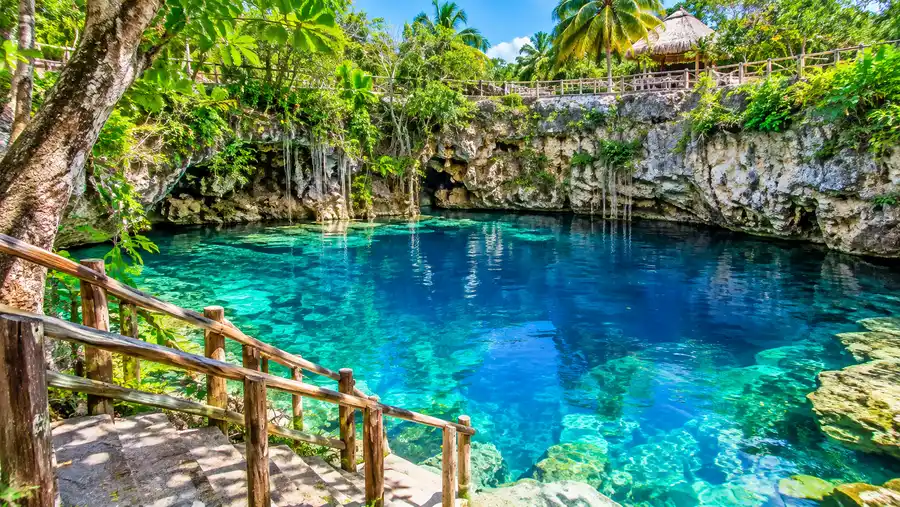
Reaching the pool is part of the fun. Once you clear the main ticket plaza and secure your backpack in the locker pavilion, follow the marked signs toward the Farallón cliff. The trail takes about 18 minutes at a leisurely walking pace, winding along an elevated wooden boardwalk through a low tropical forest. It feels surprisingly remote despite being inside a commercial park.
Along the way, you cross a wobbly suspension bridge slung over a limestone ravine. It swings just enough under your feet to make you grab the handrails, offering a great photo angle of the dry jungle canopy below. You will also pass an orchid garden and botanical stations highlighting native flora, including ancient cacti and broad elephant-ear leaves. Keep your eyes open for small green lizards scuttling across the sunlit wooden planks.
Pro tip: Head straight for Hoyo Azul the moment the park opens at 9:00 AM. Nearly everyone else heads straight for the zipline lines first, leaving the cenote almost deserted for the first 45 minutes of the morning.
The final stretch of the walk hugs the sheer cliff face. You walk beneath massive stone overhangs damp with dripping water. A descending flight of 37 wooden stairs brings you down into the natural limestone amphitheater where the pool sits. As you round the final corner, the tree canopy suddenly breaks, and you catch that first glimpse of the electric hoyo azul lagoon glowing at the bottom of the rock wall.
Book your cenote Punta Cana experience:
What It Feels Like to Swim in Hoyo Azul Cenote
Stepping down the wooden ramp into the water takes your breath away for a second. The water is cool, crisp, and distinctly refreshing after walking the humid forest trail. Because the pool is fed by underground springs, the temperature stays brisk compared to the bathtub warmth of the ocean beaches in Punta Cana. Give yourself thirty seconds to adjust, and the chill fades into pure relief.
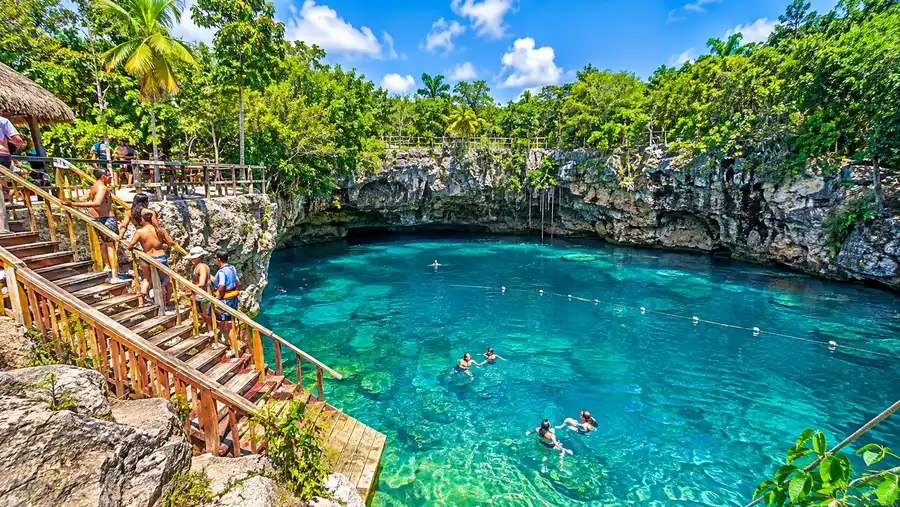
Floating in the center of the pool is a surreal sensation. You roll onto your back and stare straight up at a 200-foot vertical limestone cliff draped in wild ferns, bromeliads, and hanging roots. Voices echo softly off the stone walls. While you swim in a hidden cenote in cap cana punta cana, the rest of the world feels distant, muted by the stone bowl surrounding you. The water is so buoyant and clean that swimming requires minimal effort.
For safety reasons, the park now requires all swimmers to wear life jackets, which are stacked in bins at the edge of the boardwalk. Purists might grumble about having to wear a vest, but it actually lets you float effortlessly while staring into the abyss beneath your toes. The underwater topography drops off quickly into dark crevasses. If you bring a waterproof action camera, dip it down alongside your legs to capture the submerged beams of turquoise light cutting through the stillness.
The Dominican Republic hoyo azul pool has a designated jumping platform built into the lower wooden deck. It sits about six feet above the water level, giving you a fun, safe spot to leap into the deep section without colliding with the stone walls. The platform makes for a lively scene, with travelers cheering each other on as they splash into the cool water below.
Practical Tips for Your Hoyo Azul Cenote Tour at Scape Park from Punta Cana
A little foresight makes the difference between an effortless jungle swim and a frustrating slog through wet socks and crowds. A day out at the blue hole cenote punta cana demands practical footwear and smart gear management. The heat in the Dominican Republic spikes fast around noon, and walking on slick boardwalks in flimsy flip-flops is a recipe for a twisted ankle.
- Footwear choices: wear supportive water shoes or strap-on adventure sandals that handle wet wooden steps and rough rocky dirt paths without slipping.
- Locker rentals: rent a locker near the main park hub before heading out on the trail, because you cannot leave bags unattended on the cenote steps.
- Waterproof phone cases: bring a secure lanyard pouch for your phone, as dropping a device into forty feet of clear water means it is gone forever.
- Hydration: carry a reusable bottle of water for the hike along the cliff trail, since the air deep inside the limestone canyon can get humid and still.
If you want to explore more subterranean pools during your stay, consider booking one of the many cave cenotes in Punta Cana that feature fully enclosed cavern rooms. Those cave environments offer an entirely different atmosphere, with stalactites hanging above your head and artificial floodlights illuminating subterranean river channels.
Photography requires careful timing. The best light enters the basin between 11:30 AM and 1:30 PM, when the sun passes directly over the open canopy. At that time, the water looks impossibly blue, creating that signature glowing postcard look. Early morning offers serenity and empty waters, while midday offers the most vibrant visual colors. Choose whichever matters more to you: quiet swimming or stunning photographs.
Frequently Asked Questions about hoyo azul punta cana
How deep is the water at Hoyo Azul?
The cenote reaches a depth of approximately 46 feet at its deepest section near the cliff wall. The edges near the wooden deck are shallower, but the floor drops off rapidly into deep water.
Can you visit Hoyo Azul without paying for Scape Park?
No, you cannot. Hoyo Azul is located entirely inside the private boundaries of Scape Park at Cap Cana, meaning you must purchase a full-access park pass to reach the trail leading to the sinkhole.
Are life jackets mandatory to swim?
Yes, park staff require all guests to wear a standard life vest while swimming in the cenote, regardless of swimming ability. Vests are provided at the boardwalk platform free of charge.
How long is the hike to reach the cenote?
The trail walk takes roughly 15 to 20 minutes from the main lockers. It follows flat dirt trails, elevated wooden boardwalks, a suspension bridge, and a final wooden staircase of 37 steps.
Quick Reference
- Entry via Scape Park admission ($129 adult gate price)
- Water depth reaches 46 feet
- Average water temperature around 70°F
- 18-minute scenic trail walk with suspension bridge
- Mandatory life jackets provided on-site
Book your cenote Punta Cana experience:
Is It Worth the Trip?
Visiting Hoyo Azul is genuinely worth the detour, provided you know what you are paying for ahead of time. Spending over a hundred dollars per person simply to take a quick dip in a swimming hole might feel steep if you leave right afterward. But if you take advantage of the entire park, swim in the cave systems, walk the nature trails, and linger beneath the Farallón cliff, the experience stands out as one of the most memorable natural highlights in the Dominican Republic. Go early, leave your phone safely strapped around your neck, and take a long float in the coolest water on the island.
Read more about cenote Punta Cana.