Cenote Hoyo Claro: Punta Cana's Hidden Freshwater Natural Pool
Most people come to the eastern tip of the Dominican Republic for the coconut palms and the rum drinks handed to them on white sand beaches. That is fine, honestly. But if you spend four days straight lounging by a resort pool in Bávaro, your brain begins to melt. You start wondering if there is anything left on this coastline that has not been paved over, manicured, or fitted with a wristband scanner. There is, but you have to drive down a potholed highway and hike past thickets of thorny scrub to find it. Tucked back behind private farmland along the Coral Highway sits the cenote hoyo claro punta cana travelers whisper about when they want something raw.
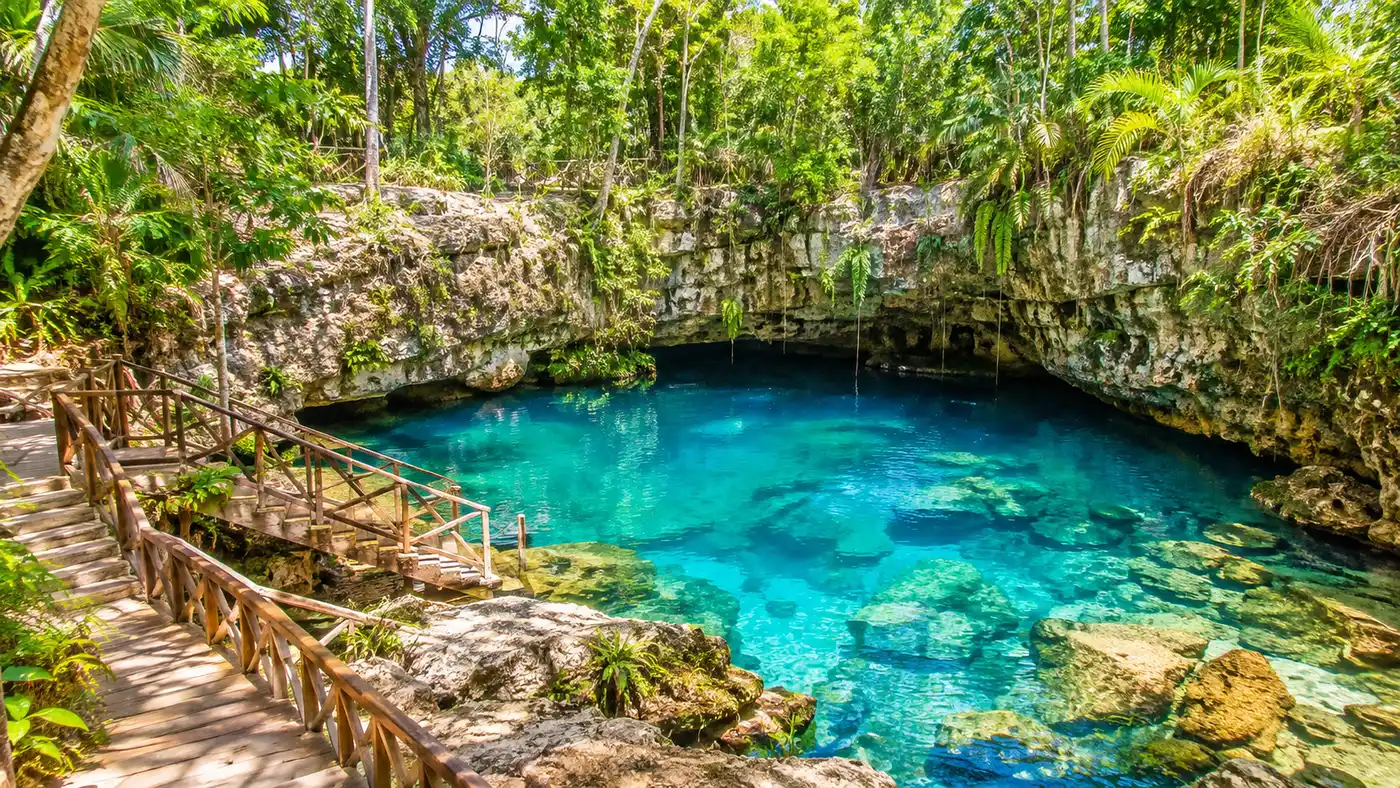
It is not a theme park. Nobody will hand you a sanitized life vest or guide you along elevated boardwalks with directional arrows. Hoyo Claro is an open-air sinkhole fed by an underground river system, sitting quiet beneath a dense green canopy. The water is startlingly cold, clear enough to see submerged tree trunks thirty feet down, and surrounded by limestone cliffs that drop straight into the blue. Finding it requires a bit of patience and a willingness to get some mud on your rental car, but swimming here feels like stumbling onto a secret that the mega-resorts forgot to buy up.
Book your cenote Punta Cana experience:
What Hoyo Claro Actually Is (and Why It Feels So Different)
The geography of this part of the island is basically a giant sponge made of porous limestone. Rain falls up in the hills, seeps down into subterranean channels, and slowly carves out massive cavern systems on its way toward the Mona Passage. When the roof of one of these chambers collapses, you get a cenote. Some are cavernous underground vaults, which you can read more about in our guide to cave cenotes in Punta Cana, while others open up completely to the sky. Hoyo Claro falls into the open-air category, framed by jungle foliage and steep rock shelves.
Because it is fed by deep groundwater, the water stays around 71 degrees Fahrenheit year-round. Step off the rocks and you will catch your breath. After the sweltering Caribbean humidity clinging to your skin during the walk in, that sudden drop in temperature is like an electric shock to your nervous system. Sunlight hits the surface through gaps in the tree canopy, turning the center a deep indigo while the shallow edges glow electric turquoise.
If you have visited Scape Park, you might be picturing something like Hoyo Azul. That place is gorgeous, without question, as detailed in our Hoyo Azul visitor guide, but it is also heavily managed, crowded with tour buses, and surrounded by safety ropes. Hoyo Claro is the polar opposite. It is an unvarnished freshwater cenote punta cana locals and independent travelers visit when they want to escape the crowds. You might share it with three local teenagers doing backflips off the roots or you might have the entire natural pool punta cana to yourself for two hours, listening to nothing but cicadas and dripping water.
Note: Hoyo Claro sits on private land bordering an environmental reserve. Access rules can shift without warning, and a local caretaker usually collects a small entry fee at the gate. Bring local cash, because cards are useless out here.
Getting There: Dirt Roads, Coordinates, and the Trail
Do not expect billboards. If you blink while driving south on the Autopista del Coral from Punta Cana toward La Romana, you will pass the turnoff entirely. The entrance sits roughly 15 minutes past the Punta Cana International Airport exit, marked mostly by a nondescript break in the trees and an unimposing metal or wooden gate depending on the season.
Once you turn off the paved highway, the road turns into caliche dust and rough crushed limestone. It is bumpy. If you rented a tiny Kia Picanto, you will need to crawl at 10 miles per hour to avoid scraping the oil pan on jagged coral rocks. High-clearance vehicles handle it effortlessly, though four-wheel drive is rarely needed unless it has been pouring rain for three straight days. You will eventually reach a small clearing where a caretaker usually sits under a shade tree or a makeshift wooden lean-to.
The gate fee generally runs around 150 to 200 Dominican pesos per person, which is roughly $3 or $4 USD. Sometimes they ask for $5 if you only have greenbacks. Pay it happily. That money keeps the area relatively clean and ensures someone keeps an eye on the vehicles parked in the clearing. From the parking clearing, you follow a narrow footpath through the dry forest for roughly 15 to 20 minutes. The trail is flat but uneven, crisscrossed by tree roots and sharp limestone outcrops that will punish you if you try walking in flimsy flip-flops.
The walk in gives you time to disconnect. The air smells of dry earth, wild oregano, and decaying leaves. Then, almost without warning, the ground drops away into a bowl of vibrant blue.
| Feature | Cenote Hoyo Claro | Hoyo Azul (Scape Park) | Indigenous Eyes Ecological Park |
|---|---|---|---|
| Setting Style | Raw, wild, untouched forest | Developed eco-adventure park | Protected private nature reserve |
| Entry Cost | ~200 DOP ($3 - $4 USD) | ~$130+ USD (full park pass) | ~$50 USD per person |
| Crowd Levels | Empty to moderate (weekends) | Consistently heavy tour groups | Low to moderate |
| Facilities | None (no bathrooms, no lockers) | Full restrooms, lockers, restaurants | Restrooms, marked interpretive trails |
| Hike Distance | Roughly 15-20 min dirt trail | 10-15 min boardwalk & stairs | 5-30 min network of packed paths |
Swimming in Hoyo Claro: Depths, Jumps, and Water Clarity
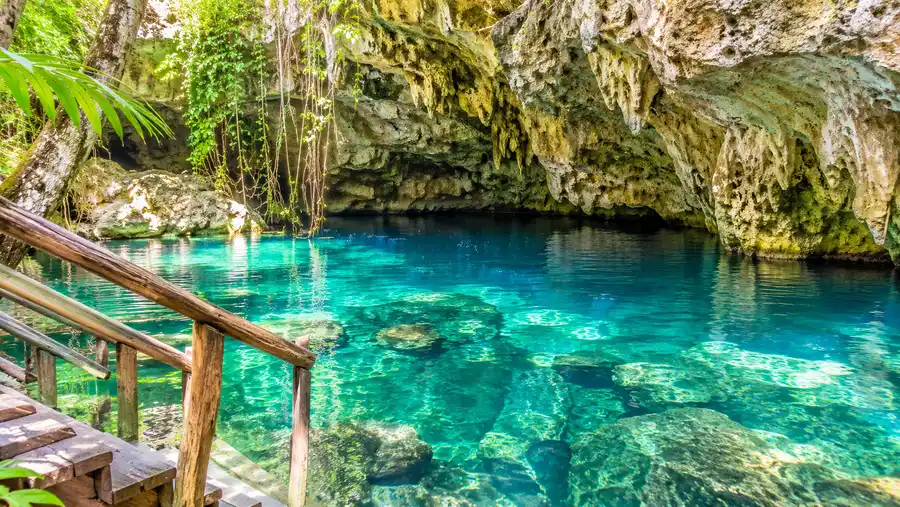
There is no gradual sandy beach here. You enter the water either by climbing down a slick wooden ladder tied to the rocks, clambering down exposed limestone ledges, or jumping straight in.
I recommend jumping. The drop from the main limestone shelf is only about seven or eight feet, just enough to get your stomach fluttering before you plunge into deep water. The depth right below the jump is easily 25 to 35 feet, so hitting the bottom is not an issue if you aim for the open center. The water is so transparent that looking down can actually give you vertigo. Sunbeams pierce through the blue layer, illuminating submerged boulders and ancient tree limbs resting on the bottom like petrified bone.
Little freshwater fish will drift over to inspect your toes the moment you stop kicking. They are harmless, curious little minnows, though the first brush against your ankle might make you jump if you are not expecting it. Floating on your back in the center of the pool, staring straight up through the hole in the jungle canopy at the blue Dominican sky, is one of the most grounding experiences on the entire island. You realize quickly that the loud, chaotic world of Punta Cana's commercial strip is only ten miles away, but it sounds, feels, and smells a universe apart.
Pro tip: Bring a snorkel mask even if you are just casually swimming. The real magic of Hoyo Claro is underground, where underwater limestone ledges fade into ink-blue caverns below your feet.
Book your cenote Punta Cana experience:
What to Bring and Practical Realities
Because this is a completely wild natural pool punta cana preserves without commercial development, there are zero amenities on site. No gear rentals, no bottled water stands, no changing rooms, and definitely no trash cans. If you show up unprepared, you will end up cutting your visit short.
- Footwear: wear real trail runners or sturdy water shoes with thick rubber soles for the hike and rock clambering.
- Insect repellent: bring bug spray for the walk through the brush, but rinse it off before entering the water.
- Dry bag: keep your car keys, phone, and towel safe on the damp rocks surrounding the pool edge.
- Drinking water: pack at least two liters per person; the hike out in midday heat will drain you faster than you think.
- Snacks: bring fruit or nuts, but carry every scrap of peel and plastic back out with you in your daypack.
Many visitors treat Hoyo Claro as a free cenote punta cana alternative because the nominal 200-peso entry fee feels basically free compared to a $150 park excursion. That affordability brings a responsibility with it. Local environmentalists have had to clean up beer cans and plastic bags left behind by thoughtless groups on multiple occasions. If you visit, leave the site cleaner than you found it. Pack an extra grocery bag to grab any stray plastic bottles left by earlier visitors along the trail.
Best Times to Visit and Staying Safe
Timing alters the entire character of this spot. Go on a Sunday afternoon, and you might find thirty people with a portable bluetooth speaker sharing a cooler of Presidente beer. That has its own fun, local charm, but if you came for tranquil swimming and nature sounds, it will ruin your vibe.
- Best time to visit: weekday mornings between 8:30 AM and 11:00 AM, before anyone else arrives.
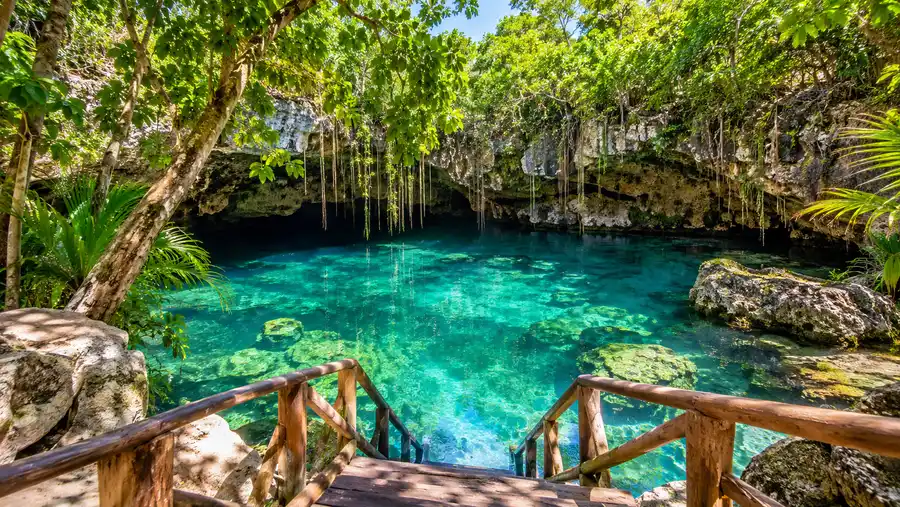
- Sunlight conditions: midday brings the brightest light directly overhead, making the water turn brilliant turquoise.
- Weather precautions: avoid visiting during sudden heavy thunderstorms, which turn the access road into slippery mud traps.
- Valuables safety: never leave bags, electronics, or sunglasses visible inside your parked car at the trailhead.
The water level fluctuates slightly with seasonal rainfall, but it is always deep enough for swimming. Watch your footing on the wet limestone rim. Wet Dominican limestone gets coated in a faint film of green algae that acts like ice under bare feet. Take small steps, hold onto tree roots when moving around the rim, and test handholds before throwing your full weight onto them.
Frequently Asked Questions about cenote hoyo claro punta cana
Is Cenote Hoyo Claro safe for children?
Only if they are strong swimmers and you keep a life vest on them the entire time. There are almost no shallow wading spots, the water is deep immediately off the edges, and rocks can be slippery for small feet.
How do I navigate there using GPS?
Search for "Hoyo Claro" on Google Maps or offline map apps like maps.me before leaving your hotel Wi-Fi. The pin is fairly accurate, but download the regional offline map because cellular service drops along the dirt access trail.
Can you visit without renting a car?
You can hire a local taxi for the morning from Bávaro or Punta Cana, but you must negotiate for the driver to wait for you at the gate clearing. Cell service is spotty at the trailhead, making it nearly impossible to summon an Uber for the return trip.
Is the water cold compared to the ocean?
Yes. Ocean temperatures around Punta Cana hover between 80 and 84 degrees, while Hoyo Claro sits near 71 degrees. It feels brisk at first touch, but your body adjusts after about two minutes of active swimming.
Quick Reference
- Entry fee: roughly 150 - 200 DOP ($3 - $4 USD) in cash
- Hike duration: 15 to 20 minutes from the car park
- Water depth: up to 35 feet in the central basin
- Facilities: none on site (completely off-grid)
Book your cenote Punta Cana experience:
Worth the Trip?
If you need paved pathways, poolside waitstaff, and climate-controlled locker rooms, do not go to Hoyo Claro. You will hate the bumpy road, complain about the spiderwebs across the dirt path, and shiver when your chest hits the water. But if you have a shred of adventurous curiosity left after days of buffet lines and resort shows, this place is an absolute breath of fresh air. It is wild, cheap, quiet, and beautiful in a way that manicured tourist attractions simply cannot replicate. Toss a towel and water shoes in a backpack, hand a few pesos to the gatekeeper, and jump in. You will remember the shock of that cool blue water long after you have forgotten the rest of your itinerary.
Read more about cenote Punta Cana.