Cave Cenotes in Punta Cana: Swimming, Caves, and Exploration
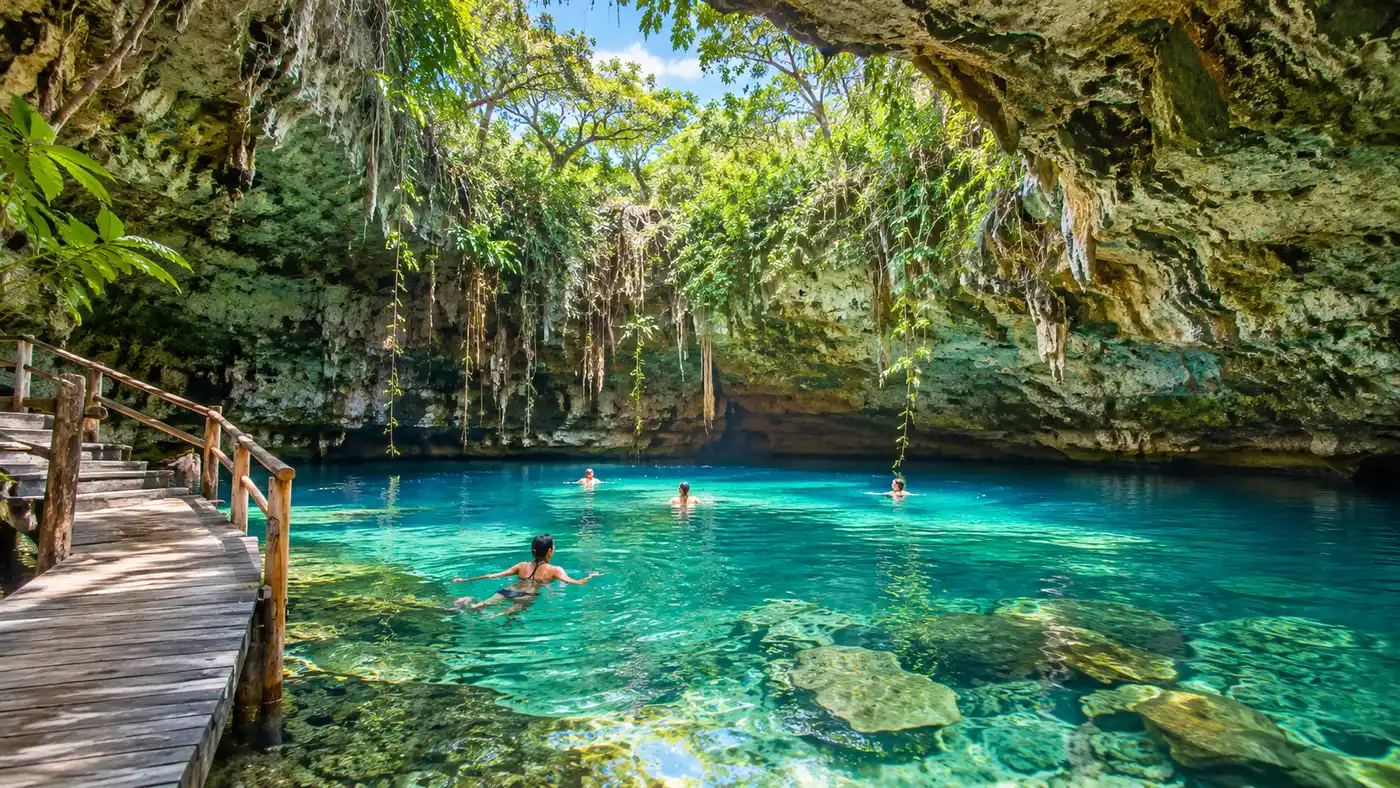
Stepping off the humid jungle path into the mouth of a subterranean cavern gives you instant relief from the Caribbean sun. The air drops ten degrees in five paces. Ahead, wooden steps slick with condensation disappear into an amber glow, leading down to an enclosed, mineral-rich pool that looks like liquid glass. Finding a secluded cenote cave punta cana visitors rarely see was easily the highlight of my last trip to the island. Most people stick to all-inclusive pool bars, but the limestone shelf under the eastern tip of the Dominican Republic hides an incredible network of flooded sinkholes, ancient caverns, and freshwater springs.
Cave cenotes are fundamentally different from open-air lagoons. They offer darkness, silence, dramatic stalactites hanging inches above your head, and a swimming experience that feels ancient. Whether you want an easy wooden boardwalk tour or an unpaved muddy scramble into an untouched cavern, the region around Punta Cana, Bavaro, and Higüey delivers far more underground variety than resort brochures let on.
The Geology Behind Every Cueva Cenote Punta Cana Hides
The ground beneath your feet across the Altagracia province is essentially porous karst limestone. Over millions of years, acidic rainwater seeped through topsoil, eating away at the rock and carving out hollow chambers. When the ceiling of an underground room gets too thin to support its own weight, it collapses inward. If the water table sits high enough, the floor fills with clear, filtered groundwater, creating what locals call a cueva cenote punta cana explorers seek out.
Sometimes the roof collapses completely, leaving an open-air swimming hole like Hoyo Claro. In true cave cenotes, only a modest opening broke through, leaving the vast majority of the cavern ceiling intact. Stalactites drip slowly from above, taking over a century to add a single centimeter of mineral deposits. You will occasionally see tiny subterranean bats darting across the shadows near the opening, eating mosquitoes before disappearing back into the deeper, pitch-black fissures.
Note: Flash photography and touching cave walls is forbidden in protected caverns. The natural oils from human hands halt thousands of years of mineral growth instantly.
The water temperature in these enclosed subterranean caverns hovers around 71 to 73 degrees Fahrenheit year-round. It feels shockingly cold for about thirty seconds when you drop in from 88-degree tropical heat. Once your skin adjusts, the water feels silky and clean because it filtered through miles of dense limestone before bubbling up into the pool.
Book your cenote Punta Cana experience:
Top Spots for a Cenote Cave Swim Punta Cana Travelers Love
Not all caverns are managed the same way. Some are fully electrified eco-parks with lockers and cocktail bars, while others are dirt holes behind a farmer's gate where you pay 150 pesos to a kid swinging in a hammock. Depending on your appetite for mud and comfort, here are the primary underground caverns worth exploring.
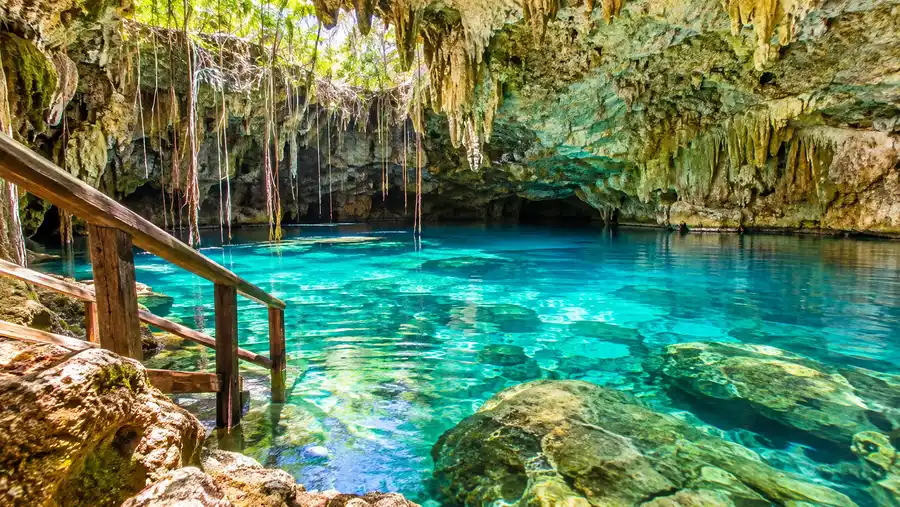
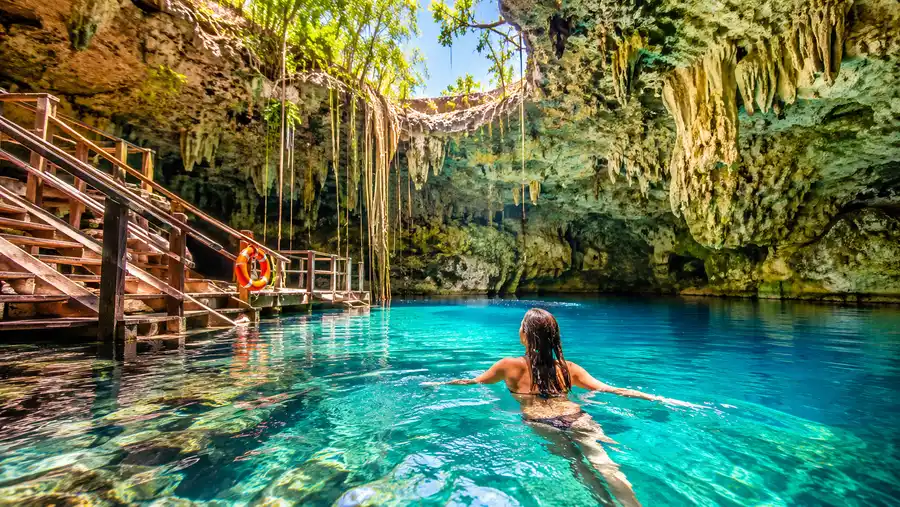
Cenote Las Ondas punta cana travelers visit inside Scape Park sits entirely beneath a massive cliff face. A wooden staircase drops 40 feet into a dimly lit grotto where submerged spotlights illuminate flat, calm turquoise water. The park added smooth walkways and handrails, so you can do a relaxed cenote cave swim punta cana style without scraping your knees on jagged coral limestone. It feels theatrical, but the geological formations overhead are completely real, accompanied by historical replicas of Taíno indigenous cave petroglyphs.
If you prefer wilder spots, head north toward Macao. Near the beach lies Cenote Macao punta cana off-roaders hit daily, formally known as Cueva Taína or los hoyos del salado cenote. This is a deep limestone fissure you climb down into using rustic wooden ladders. The water inside is incredibly deep, cold, and clear, stretching back into pitch-black recesses that require a dive torch to see properly. Many travelers stop here during bumpy Punta Cana cenote buggy tours, which means mid-afternoons get very loud and muddy. If you go on your own at 8:30 AM before the buggies arrive, you will have a silent, sacred chamber entirely to yourself.
Further south in the private resort enclave of Cap Cana, you will find the Indigenous Eyes Ecological Park. While most people visit for the open-air lagoons, an eco tour in the cenotes indigenous eyes in punta cana covers several semi-enclosed springs surrounded by thick jungle vines. The water in Cenote Guama is over 26 feet deep and remarkably clear. For a comparison between closed caverns and massive open-air sinkholes, look into the towering cliff walls of Hoyo Azul, which sits right across the valley.
Pro tip: Pack a cheap waterproof headlamp with at least 200 lumens. Cave lighting in undeveloped cenotes is either weak or broken, and holding a phone flashlight while treading water never ends well.
Comparing the Best Cave and Cavern Cenotes
Getting your bearings takes a minute because local operators use Spanish and indigenous Taíno names interchangeably. The table below outlines what to expect at the main sites across the Punta Cana and Higüey corridor.
| Cenote Name | Cavern Type | Entry Cost | Drive from Bavaro | Vibe |
|---|---|---|---|---|
| Las Ondas | Fully enclosed cavern | $129 (Park pass) | 45 minutes | Paved, guided, well-lit |
| Cueva Taína (Salado) | Semi-open cave pool | ~$10 (or tour) | 25 minutes | Rugged, popular with buggies |
| Cenote Ojos Indígenas | Semi-open jungle springs | $50 | 35 minutes | Peaceful, private, lush |
| Cueva Cueva Padre Nuestro | Deep flooded cave system | ~$15 | 65 minutes | Raw adventure, quiet |
| Cenote Caribe | Open cavern shelf | ~$8 | 40 minutes | Local, uncrowded swimming |
Every site offers something different. Las Ondas is built for people who want zero dirt under their fingernails. Cueva Taína caters to travelers who do not mind slippery rocks and a little red clay on their shins. Padre Nuestro, located just past Bayahibe near the national park boundary, offers genuine cavern exploration where cenote diving punta cana technical divers spend hours charting underwater tunnels.
Book your cenote Punta Cana experience:
Packing List for Punta Cana Cenote Swimming
Visiting a cave cenote dominican republic style requires different gear than a lazy beach afternoon. You cannot just wear flip-flops down wet limestone steps and expect to keep your footing.
- Sturdy water shoes with rubber grip: Wet limestone inside caves is sharper than broken glass in some spots and greasy as butter in others. Cheap flip-flops will snap within five paces.
- Biodegradable sunscreen or none at all: Traditional sunscreens contain chemicals like oxybenzone that poison the delicate subterranean shrimp and blind fish living in stagnant cavern pools. Rinse off completely before sliding in.
- Dry bag with shoulder strap: The air inside caverns is extremely humid. Even if you leave your bag on a dry boulder, moisture drips constantly from the ceiling stalactites.
- Quick-drying microfiber towel: The cave air stays cool, so you will want to dry off the second you climb out of the water to prevent shivering on the hike back.
- Small cash in Dominican Pesos: Rural cave caretakers near Higüey and Macao rarely have card machines, and cell service inside limestone depressions is nonexistent.
Cenote Diving Punta Cana: Venturing Beyond the Daylight
For certified scuba divers, swimming at the surface is just scratching the surface. The karst platform running from Punta Cana over to Bayahibe features some of the best cave diving in the Caribbean. Unlike open-water reef dives, diving in a submerged cave system requires specialized overhead environment training, reels, redundant air sources, and neutral buoyancy control.
Cueva Padre Nuestro in the Cotubanamá National Park area is the premier cavern dive in the region. Divers submerge through a dry cave entrance before following a permanent guideline through massive rooms filled with submerged stalagmites that formed thousands of years ago when sea levels were much lower. The visibility inside easily exceeds 150 feet because there are no waves, tides, or plankton blooms to cloud the water. You float in complete sensory deprivation, feeling like you are flying through empty space.
If you are an Open Water diver without cave credentials, you can still arrange a cavern dive with reputable dive centers in Bavaro or Bayahibe. The golden rule of cavern diving is staying within the daylight zone, which means you never lose sight of natural ambient light coming from the cave mouth. Straying beyond that line into total darkness without cave certification is strictly forbidden.
How to Plan Your Visit: Independent vs Organized Tours
You have two practical ways to reach the best cenotes in punta cana. You can rent a small car and drive yourself, or book an organized excursion through a tour operator.
Driving independently lets you avoid the massive crowd waves. Buggy tours and bus groups generally swarm the caves between 10:30 AM and 2:00 PM. If you show up in a rental car at 8:30 AM or wait until 3:30 PM, you will often find caverns like Cueva Taína or the cenotes cerca de punta cana completely empty. Driving in the Dominican Republic can be erratic, so keep your eyes peeled for stray motorbikes, unmarked speed bumps, and cows grazing along rural shoulders between Bavaro and Higüey.
If you hate the idea of driving abroad, organized tours make logistics easy. A buggy safari handles the muddy backroads out to Macao effortlessly. Alternatively, private van drivers can be hired for roughly $100 to $140 for the day. A dedicated driver will take you out to Higüey punta cana cenotes, wait under a tree while you swim for two hours, and take you to a local roadside comedora for stewed goat and fried plantains afterward.
Be careful around loud party excursions. Some operators market a cenote party punta cana experience, blasting reggaeton through battery-powered speakers inside cavern mouths while pouring rum shots for tourists. If you want natural quiet and underground beauty, ask your tour company explicitly if their excursion is an eco-tour or an open-bar party before handing over your credit card.
Frequently Asked Questions about cenote cave punta cana
Are cave cenotes safe for swimming in Punta Cana?
Yes, established cave cenotes are safe for confident swimmers. Most managed sites provide life jackets, handrails, and wooden steps. Always mind your step on slick limestone boulders, never jump into dark water without checking the depth first, and stay close to the access ladder if you tire easily.
Can children swim in Punta Cana cave cenotes?
Children can swim in cave cenotes like Las Ondas or Ojos Indígenas because they feature shallow edges, clear paths, and mandatory life vests. Wild caves like Cueva Taína near Macao involve steep ladders and deep water, which can be difficult or scary for toddlers and young kids.
What is the difference between cenotes em Punta Cana and Mexican cenotes?
Mexican cenotes in the Riviera Maya sit across a much broader geological shelf, creating thousands of massive interconnected sinkholes. Punta Cana cenotes are fewer in number, slightly more compact, and often more cavernous, featuring distinct Taíno indigenous history and dense surrounding tropical jungle.
Do I need to know how to scuba dive to see the caves?
Not at all. The vast majority of travelers visit cave cenotes purely for surface swimming, snorkeling, and photography. Scuba diving is only required if you intend to travel deep into completely flooded subterranean passages that leave the cavern entrance behind.
Quick Reference
- Water temperature: 71°F to 73°F year-round
- Drive time from Bavaro: 25 to 65 minutes
- Best visit window: 8:00 AM - 10:00 AM
- Must-have item: Grippy rubber water shoes
Book your cenote Punta Cana experience:
My Take: Are Punta Cana's Cave Cenotes Worth It?
If you come all the way to the Dominican Republic and spend your entire vacation sitting on a resort sun lounger, you are missing the best part of the island's landscape. Swimming inside a quiet limestone cavern surrounded by thousand-year-old stalactites gives you an entirely different perspective on this coastline. Skip the crowded party boats at least once, wake up early, put on some water shoes, and descend beneath the jungle canopy into the cool, silent water waiting underground.
Read more about cenote Punta Cana.